Moving day
Moving day with a garment rack
The best case for a garment rack shows up on moving day, when a whole rail of clothes crosses the apartment in a minute, still on hangers, while the dresser people are only on drawer number one. But racks reward a little technique.
Rolling it loaded
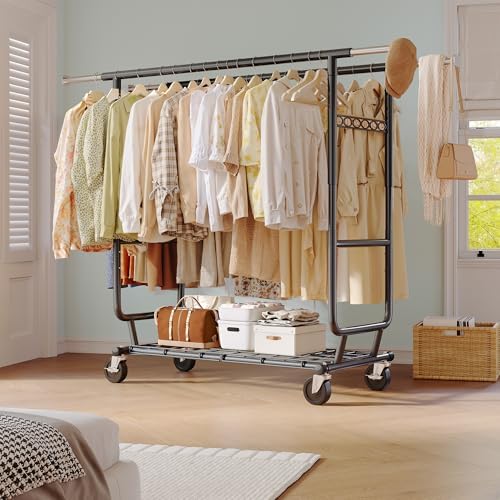
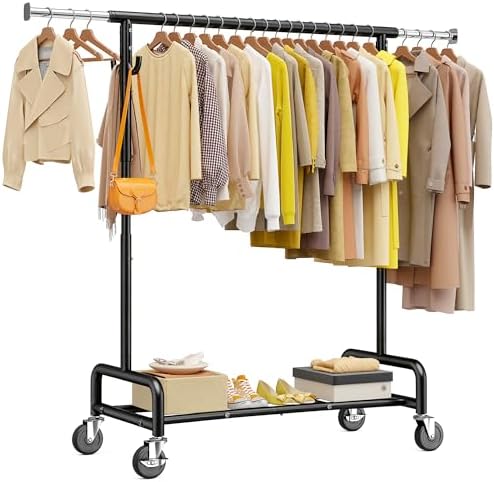
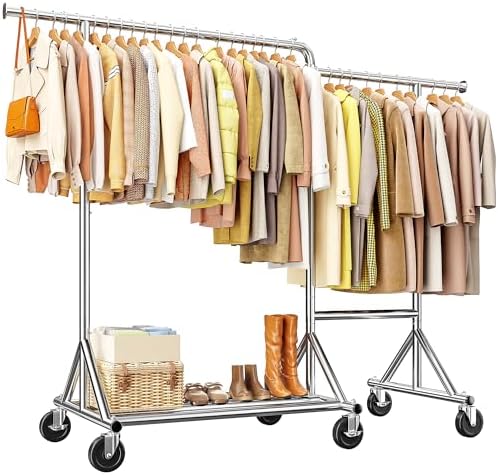
Across one room, on a hard floor, a loaded rack rolls fine. Push from the middle of an upright, low, not from the rod; pushing the rod steers the top and the bottom follows late, which is how corners get clipped. Thresholds and rug edges want a second person or a lighter rail. And measure the doorway before you commit. A telescoping rack extended for coats can be wider than the door it came through, and the fix is thirty seconds of narrowing, not force.
When it should come apart instead
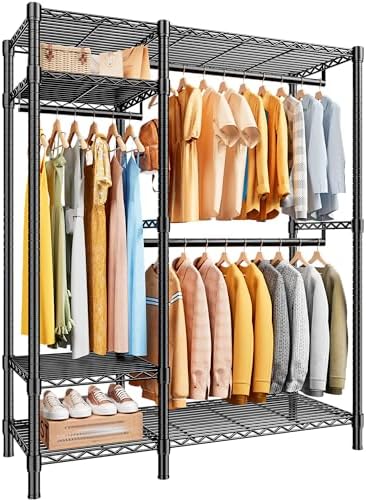
Stairs, a truck, a hallway with turns: strip the clothes off in armfuls, laid flat across a back seat, and break the frame down. Bolted steel goes back to flat pieces quickly if you keep order. Our habit: drop every bolt, nut and wrench into one zip bag and tape the bag to an upright. The frame cannot get separated from its own hardware, and reassembly starts with everything in one hand.
Reassembly, in the order that works
- Casters first, onto the base pieces, while they are light enough to flip.
- Uprights next, bolts started by hand all around before any one is wrenched tight.
- Square it by eye against a wall, then tighten in a cross pattern, corner to opposite corner.
- Rod and shelves last, and the level check happens with weight on, not before.
One caution we repeat because it is the one that costs people: a folded or half-assembled frame is not a ladder and not a hand truck. It carries clothes along a rod, spread out and still. Everything else it does under protest.