Sorting the pile
Hang or fold: deciding what earns rail space
Rail space is the expensive part of any clothes setup. A folded stack costs a shelf, but a hanger costs rail, and rail is what runs out first. So before we talk frames, sort the pile.
What actually needs a hanger
Anything with a built shape. Blazers, structured dresses, pressed shirts, pleated skirts, coats with shoulders that took a tailor some trouble. Fold these and the crease you get is the crease you wear. They hang, no debate.
Then the maybes. T-shirts survive folding fine. Jeans do too, and they stack dense. Knits are the trap: a heavy sweater on a hanger grows little shoulder horns within a week and stretches at the neck. Fold knits, always the knits.
The arithmetic
On a wooden or thick plastic hanger, a shirt takes about an inch and a quarter of rail. Coats and anything padded want closer to two. Count what survived the sort, multiply, and you have the rail length you are shopping for. Our closet math page does this count for you and points at frames whose rails cover it.
Mapping the sort onto steel
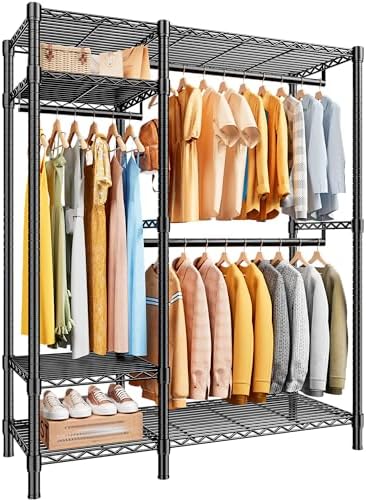
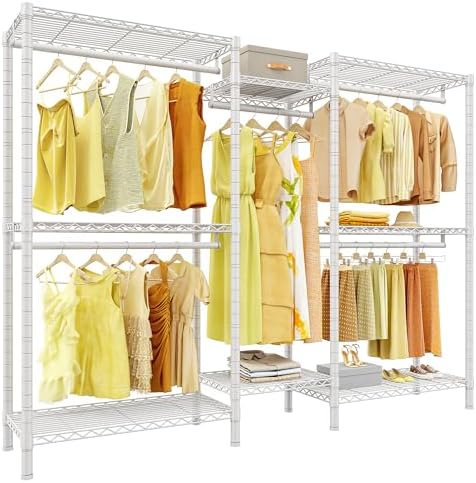
- Mostly hanging, little folding: an open rack. One rod for a mixed run, a double rod if the pile splits into long and short.
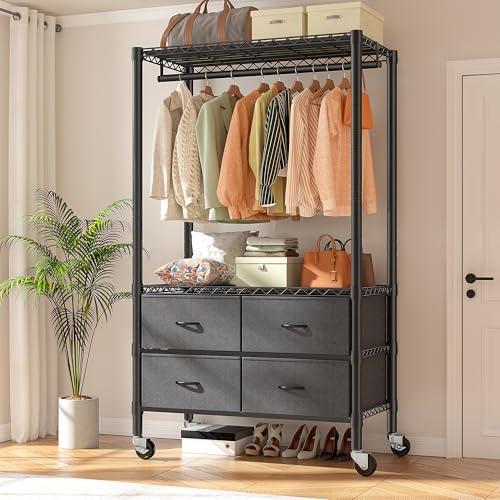
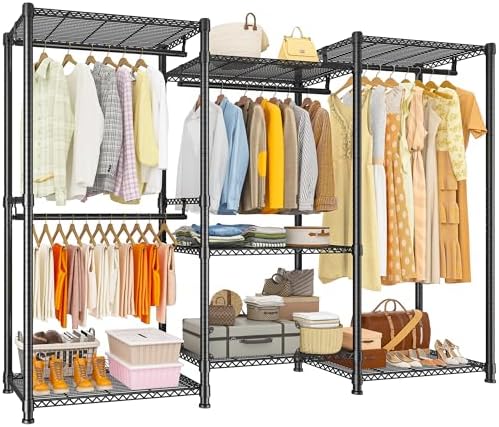
- Half hanging, half folded: a freestanding closet. The rods take the shaped things, the shelves and fabric drawers take the knits and the jeans.
- Mostly folded bulk: wire shelving. Hanging one rod of essentials next to a wall of shelves beats forcing a rack to be a dresser.
One more habit worth stealing. When the rail fills up, the answer is rarely a wider rail. It is a second sort. The pile drifts back toward hanging everything because hanging is less work in the moment, and the rod pays for that later, in crowding and in weight. A fold pass twice a year keeps the math honest.